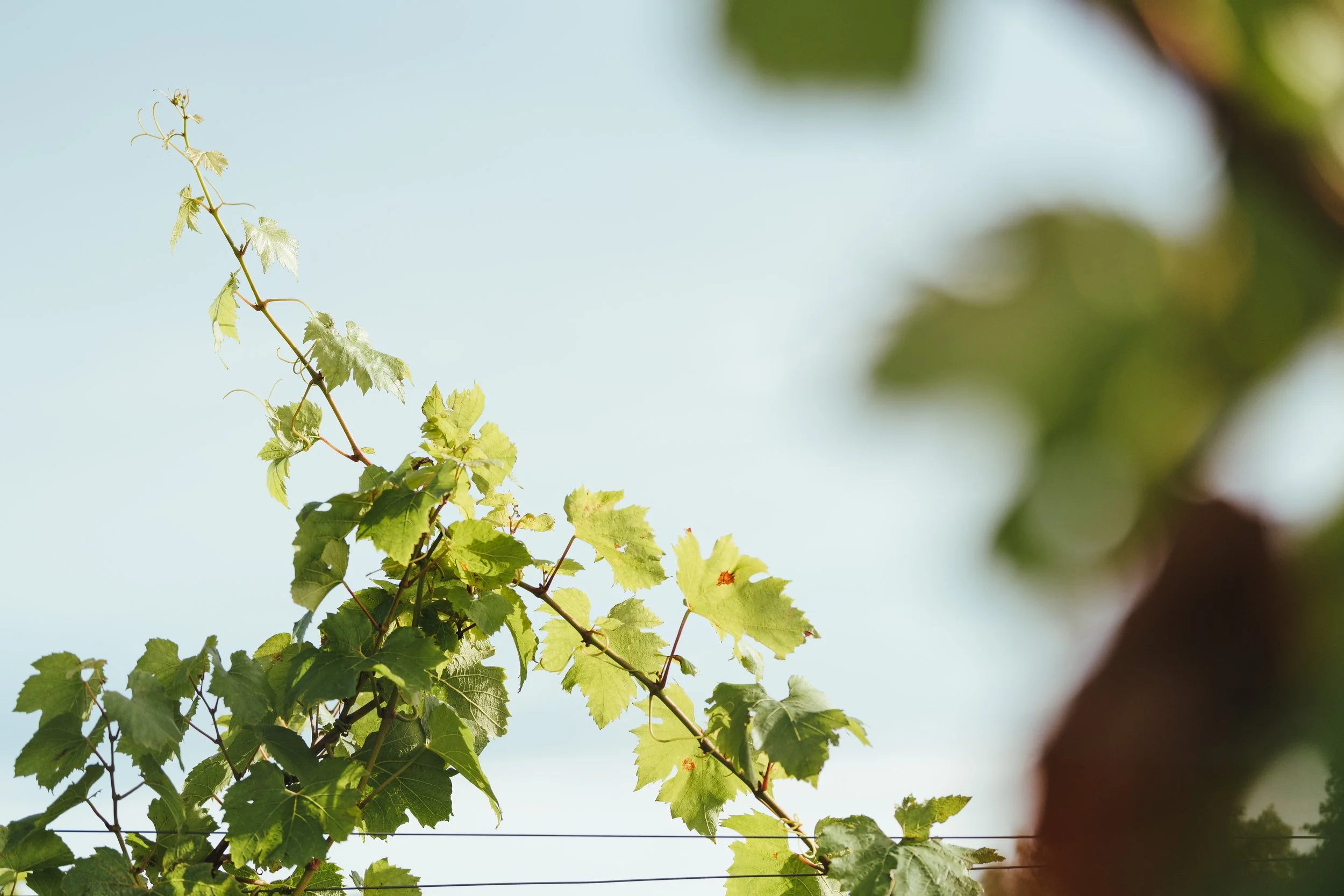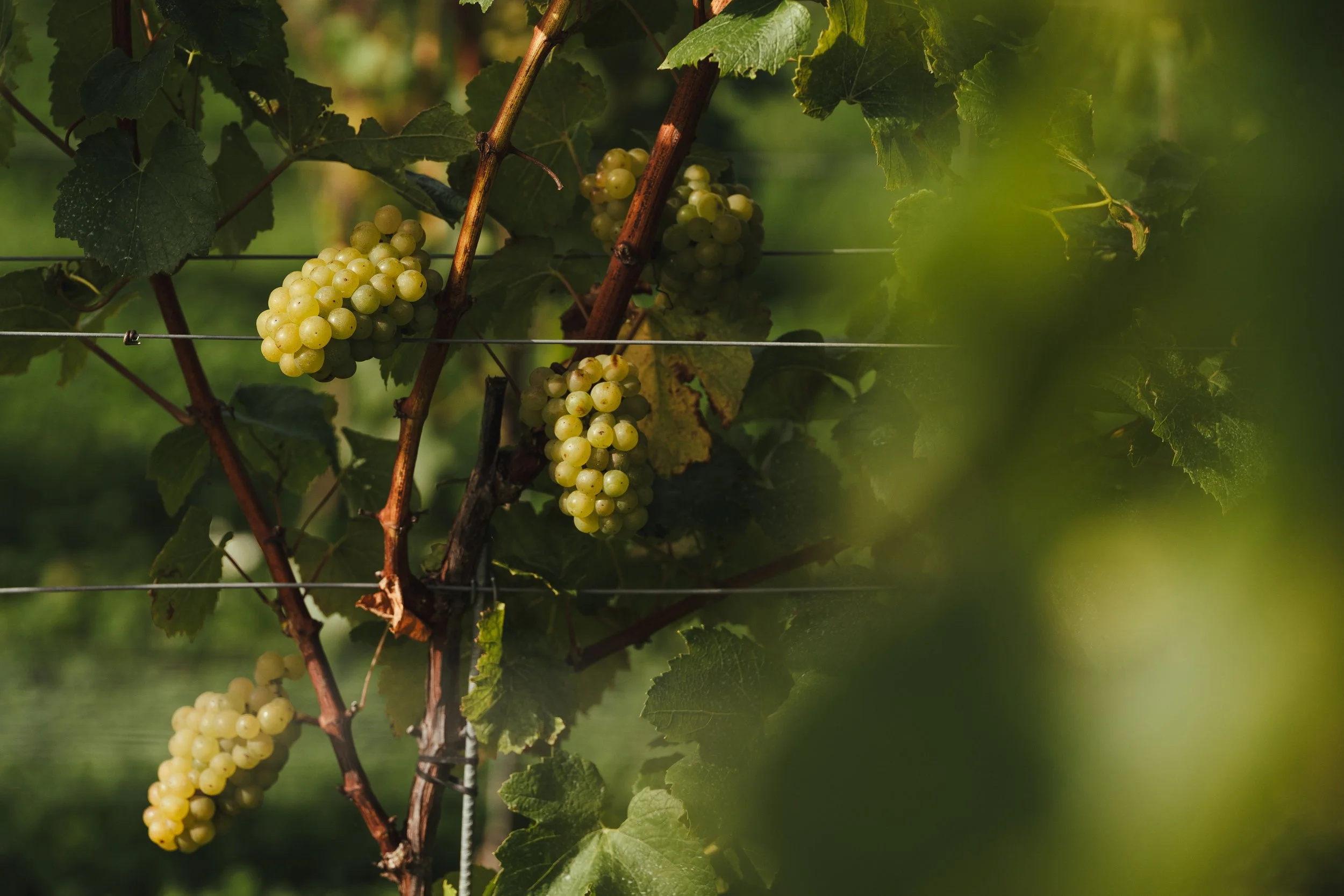
The land and the Vines
We set out to create a single-estate vineyard focussed on quality. Our wines are produced in limited quantities and offered as an invitation to slow down and enjoy something made with care.
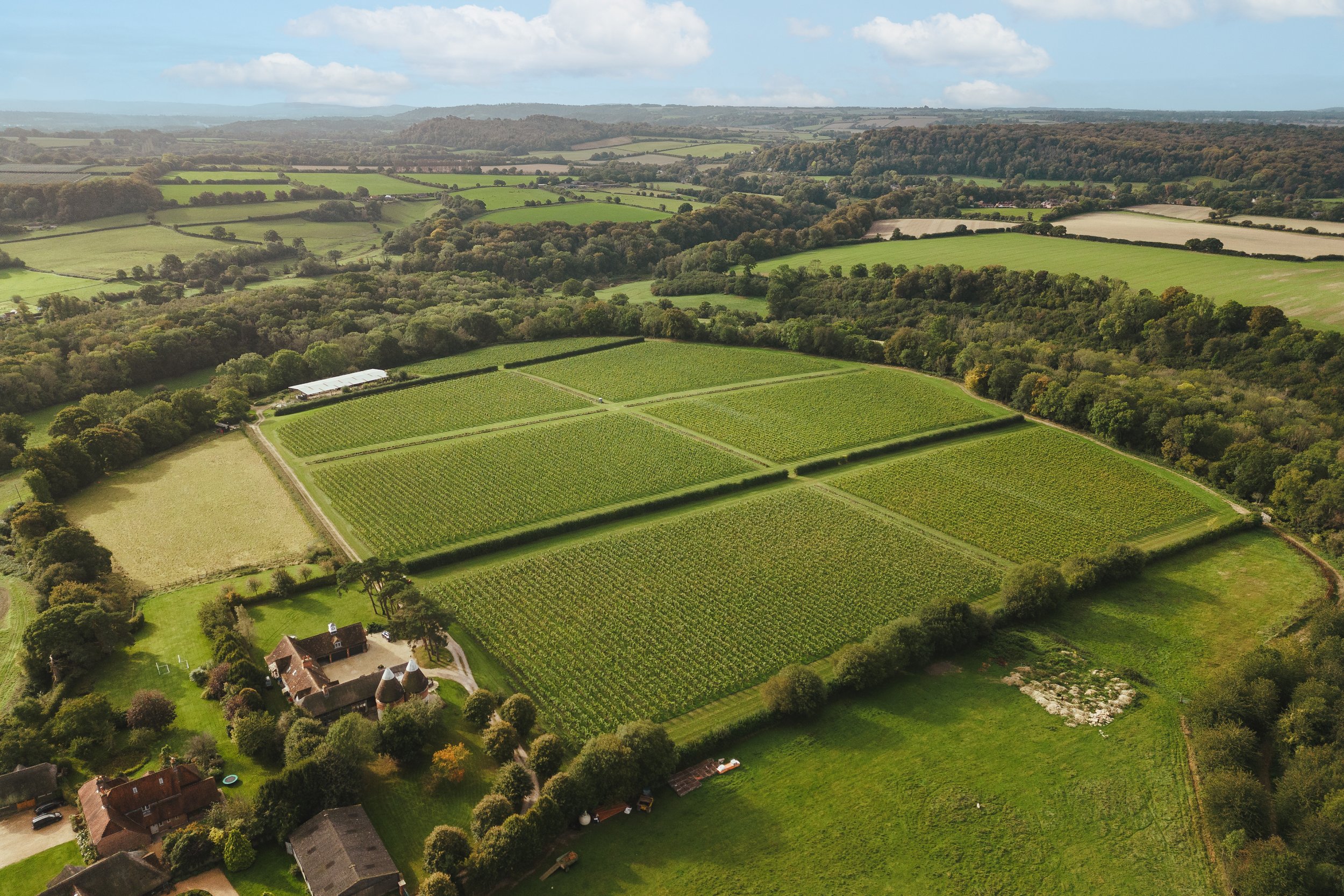
The estate and vineyards lie within the South Downs National Park, on a sheltered hillside typical of this part of Hampshire, where steep hanger woodland frames the vines and helps create a gentle, protected mesoclimate.
The vines are planted on sloping ground, allowing cold air to drain away on still nights and reducing frost risk in the spring, an important advantage in a cool-climate region.
The soils are predominantly greensand: light, sandy and naturally free draining. These soils warm quickly in spring and encourage the vines to root deeply in search of water and nutrients. The result is moderate vigour, smaller berries and concentrated flavours, all of which suit the production of high-quality still and sparkling wines with freshness and precision.
Planting focuses on the classic sparkling trio, Chardonnay, Pinot Noir and Pinot Meunier. We use a mix of Burgundian and Champagne clones to balance aromatic detail, texture and structure, giving us blending options that reflect both finesse and depth from year to year.
Winemaking
We work with partnership winemakers to ensure that the final wines are the best expression of the Otium Estate - reflecting their origins, and showcasing the wonderful quality of fruit we can now grow here in Hampshire.
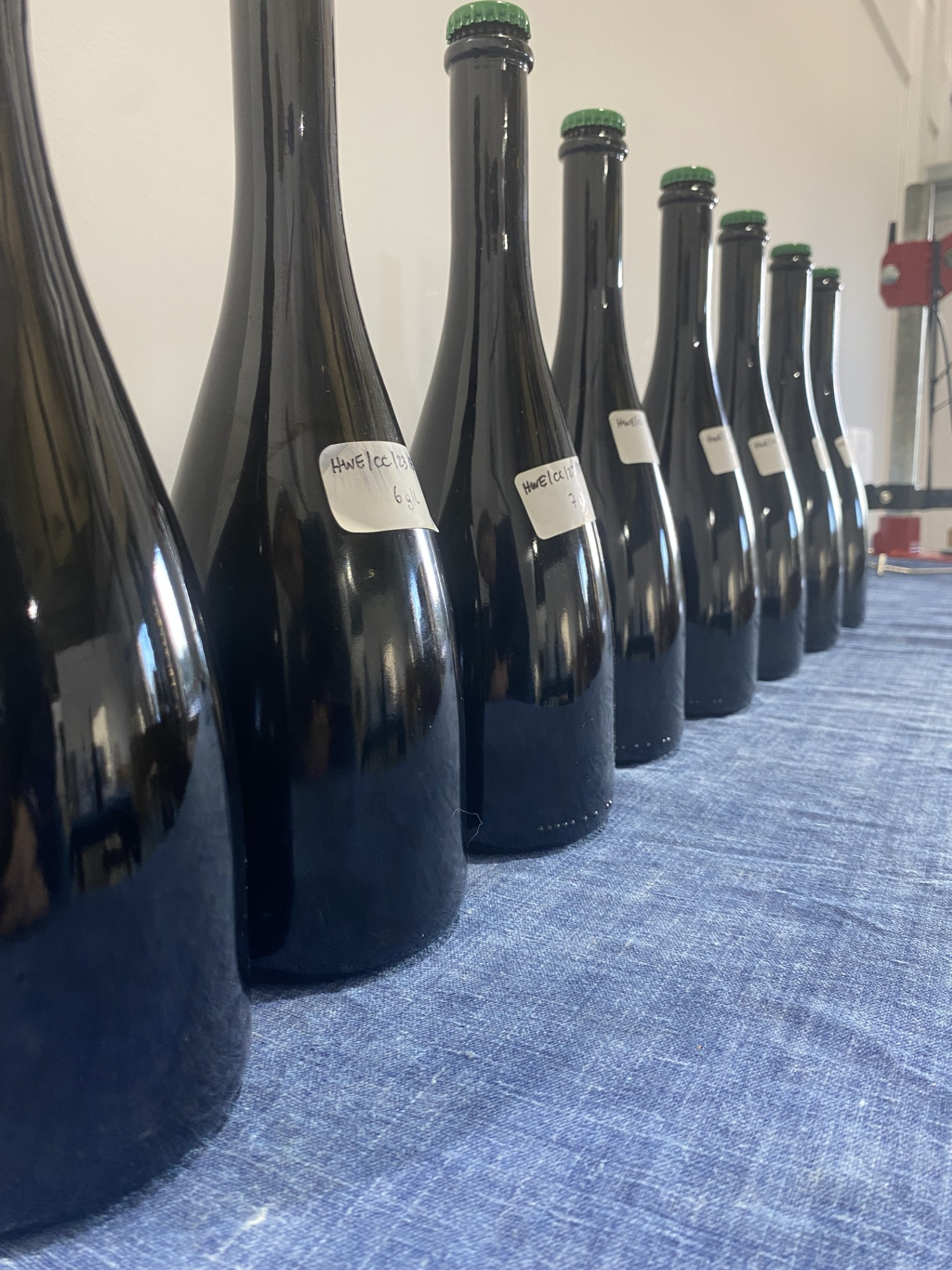
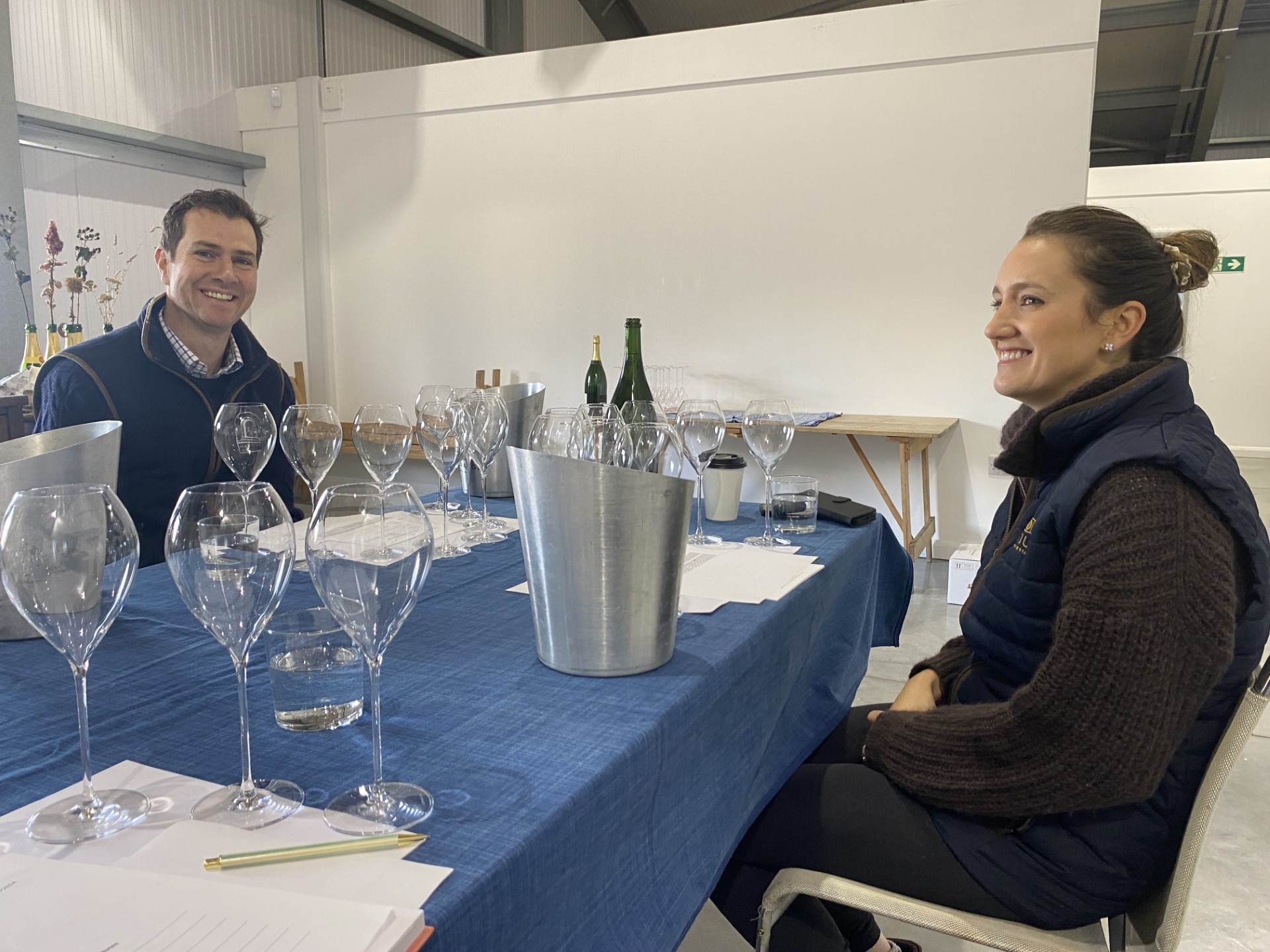
For the sparkling wines, grapes are gently pressed and allowed to ferment in stainless steel tanks (used to preserve the fresh aromas and flavours) and a small portion in old oak barrels, (used to add texture and complexity). After being allowed to rest for several months, the still wines were then blended and bottled, with a fresh addition of yeast and sugar to facilitate second fermentation in the bottle. They were then allowed to rest on their ‘lees’ (resulting yeast cells), encouraging autolysis, for a minimum of two years before disgorging and release.
Care in the Vineyard
All vines are trained to single Guyot with vertical shoot positioning (VSP), a system that supports balanced yields and allows careful canopy management. By controlling light, airflow and crop levels through the season, we aim to achieve even ripening while keeping disease pressure low. Our approach to viticulture is rooted in regenerative, low-intervention principles. We avoid herbicides, returning organic matter to the soil by mulching prunings and building soil health with diverse cover crops between the rows (wildflower mix, linseed, chicory, swet clover, smart raddish). Alongside this, we invest in biodiversity across the estate, planting native hedgerows, keeping honey bees, and sowing wildflowers to encourage pollinators and beneficial insects.
Where treatments are required, we use a recycling Lipco sprayer, which captures and reuses spray drift within the canopy. This significantly reduces the volume of inputs needed and limits off-target application, helping us protect both the vineyard ecosystem and the wider landscape. We also allow sheep to graze between the vines in the winter months, which helps sustainably manage weeds and completes the nutrient cycle of nutrients eaten, digested, dropped, degraded and allowed back to the soil. The aim is simple: to farm thoughtfully and build healthy, living soils so the vineyard can express its site clearly and sustainably, vintage after vintage.